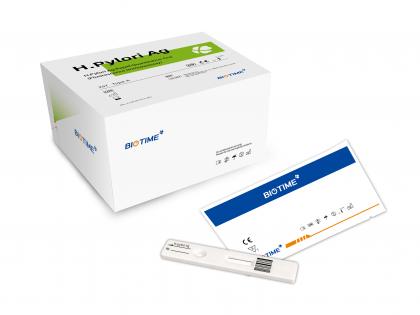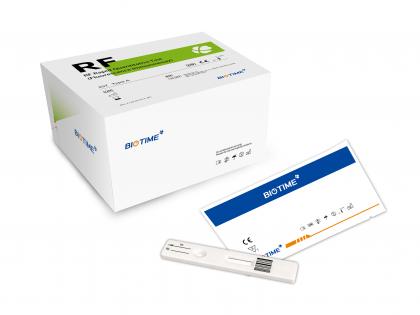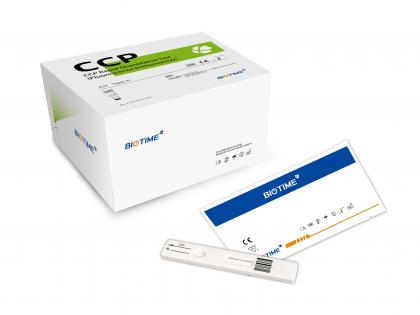
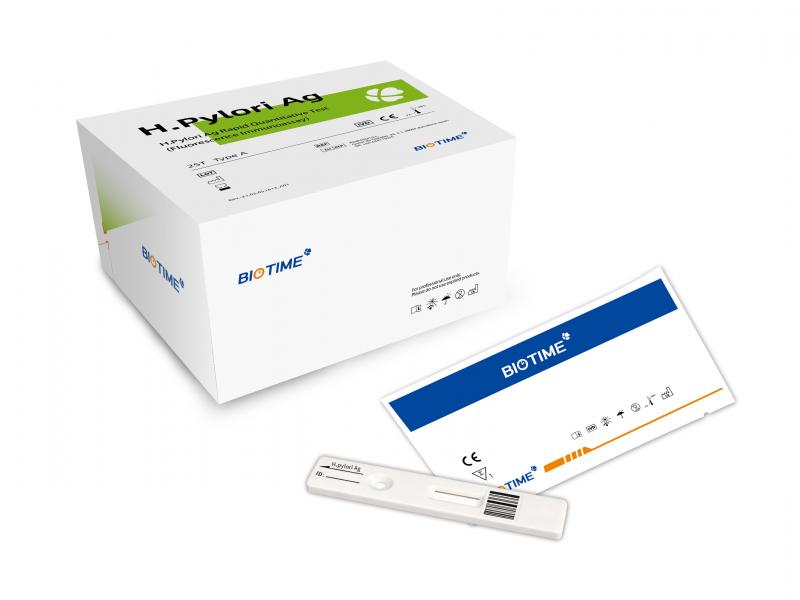
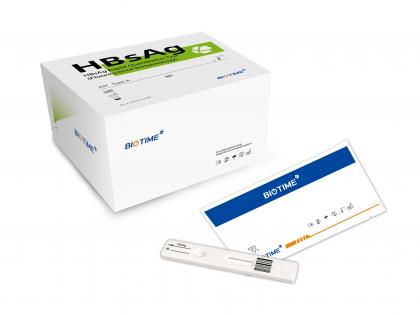
The Biotime Helicobacter pylori (H.pylori) Antigen Rapid Test is intended to qualitatively detect the Helicobacter pylori (H.pylori) antigen in human faeces samples on Biotime FIA Analyzer by fluorescent immunoassay. The test is used as an early aid diagnosis and screening of Helicobacter pylori infection.
For in vitro diagnostic use only. For professional use only.
|
Specimen Types |
Faeces |
|
Sample |
Faeces:5-10mg |
|
Reaction Time |
15 min |
|
Cut-off value |
≥95% |
Clinical Significance:
1. Detection of Active Infection
The test detects H. pylori antigen in stool samples, which indicates current or active infection, rather than past exposure.
Antigen detection reflects active bacterial colonization, making it useful for both initial diagnosis and confirmation of infection status before treatment.
2. Relevance to Disease Burden
H. pylori is a Class I carcinogen and the main pathogenic factor for chronic active gastritis, peptic ulcer, gastric mucosa‑associated lymphoid tissue (MALT) lymphoma, and gastric cancer.
Early and accurate detection enables timely eradication therapy, thereby reducing the risk of long‑term complications, including gastric malignancy.
3. Utility in High‑Prevalence Settings
The bacterium infects more than half of the world’s population, with strong transmission via hands, food, utensils, and feces.
This test is well‑suited for screening in high‑prevalence areas or households, helping to identify infected individuals and interrupt transmission chains.
4. Diagnostic Advantages of the Method
Using a fluorescence immunoassay with double‑antibody sandwich technology, the test provides high specificity and sensitivity.
It allows objective quantitative or semi‑quantitative reading via an immunofluorescence analyzer, reducing subjective interpretation errors compared to conventional rapid tests.
5. Clinical Applications
Diagnosis of H. pylori infection in patients with dyspepsia, gastritis, or peptic ulcer.
Post‑treatment follow‑up (usually ≥4 weeks after completing eradication therapy) to confirm successful eradication, as antigen detection is not affected by recent antibiotic or proton pump inhibitor use as much as other methods (e.g., urea breath test).
Please provide us with the information below, and we'll contact you as soon as possible.




Copyright © 2013-2026 Xiamen Biotime Biotechnology Co., Ltd.. All Rights Reserved.
 IPv6 network supported