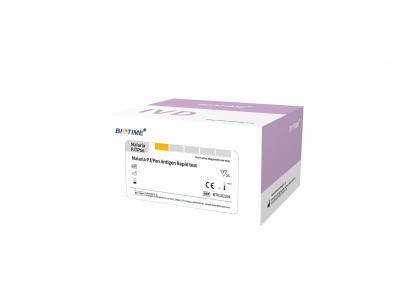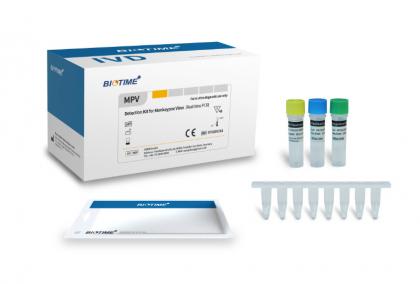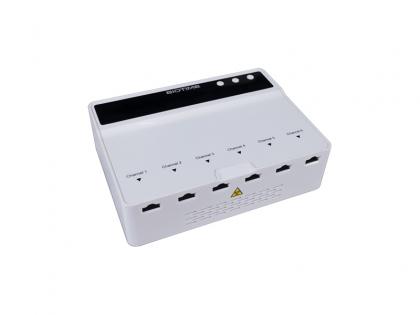
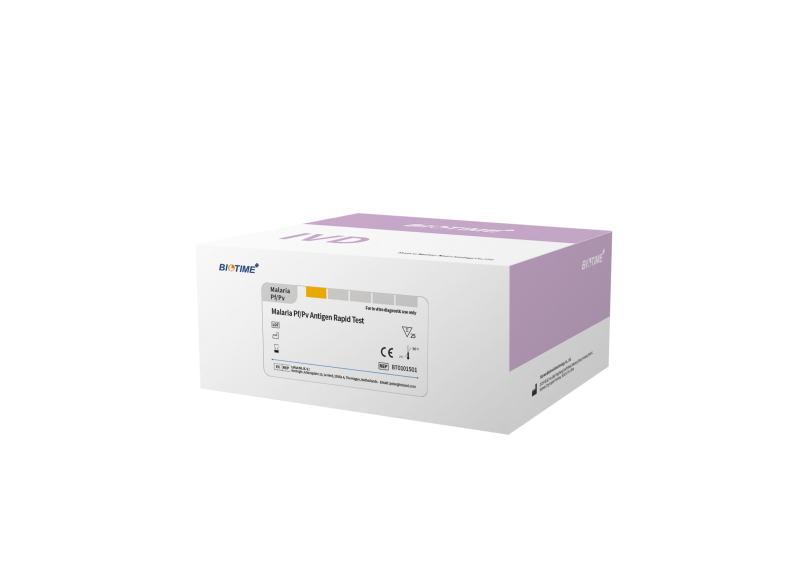
The Malaria P.f/P.v Antigen Rapid Test is a lateral flow immunoassay for the qualitative detection of Histidine-Rich Protein II (HRP-II) specific to Plasmodium falciparum (P.f) and Plasmodium lactate dehydrogenase (pLDH) specific to Plasmodium vivax (P.v) in human whole blood specimen. It is intended to be used by professionals as a screening test and provides a preliminary test result to aid in the diagnosis of infection with Malaria. For professional in vitro diagnostic use only.
Introduction Malaria is one of the most devastating infectious diseases of humans. It is problematic clinically and economically as it prevails in poorer countries and regions, strongly hindering socioeconomic development. The causative agents of malaria are unicellular protozoan parasites belonging to the genus Plasmodium. These parasites infect not only humans but also other vertebrates, from reptiles and birds to mammals. The Malaria P.f/P.v Antigen Rapid Test is a rapid lateral flow immunoassay for the qualitative detection of Histidine-Rich Protein II (HRP-II) specific to Plasmodium falciparum (P.f) and Plasmodium lactate dehydrogenase (pLDH) specific to Plasmodium vivax (P.v) in human whole blood and can give a result between 20-30 minutes by minimally skilled personnel without any laboratory equipment.
Product Features
Product Name:Malaria P.f/P.v Antigen Rapid Test
Sample Type:Whole Blood
Loading Volume:2 drops
Reaction Time:20-30 mins
Shelf Life:24 months
Storage:35.6-104°F (2-40℃)
Test Procedure The test should be operated at room temperature 59-86°F (15-30℃). 1. Allow the test cassette, specimen and buffer to reach room temperature before testing. 2. Remove the test cassette from the foil pouch and use it as soon as possible. 3. Place the test cassette on a flat and clean surface. Transfer the specimen by a pipette or a dropper: 4. Wait for the colored line(s) to appear and read the results between 20-30 minutes.
The Malaria P.f/Pan Antigen Rapid Test is a rapid lateral flow immunoassay for the qualitative detection of Histidine-Rich Protein II (HRP-II) specific to Plasmodium falciparum (P.f) and Plasmodium lactate dehydrogenase (pLDH) specific to Plasmodium species (Pan) in human whole blood specimen. It is intended to be used by professionals as a screening test and provides a preliminary test result to aid in the diagnosis of infection with Malaria. For professional in vitro diagnostic use only.
BIOT-YG-I is a fluorescence immunoassay system with single channel that measures the quantitative concentration of a targeted analyte in human blood and urine.
The SARS-CoV-2 Antigen Rapid Qualitative Test is a colloidal gold immunochromatography intended for the qualitative detection of nucleocapsid antigens from SARS-CoV-2 in human nasal swabs, throat swabs, and sputum from individuals who are suspected of COVID-19 by their healthcare provider. within the first five days of the onset of symptoms.
PCT(Procalcitonin) is a peptide precursor of the hormone calcitonin. Measurement of PCT can be used as an authoritative marker for diagnosis and stratification of sepsis.
Human pepsinogens I (PGI) and II (PGII) are proenzymes of pepsin—an endoproteinase of gastric juice. PGI is secreted mainly by chief cells in the fundic mucosa, whereas PGII is also secreted by the pyloric glands and the proximal duodenal mucosa. Serum PGI and PGII concentrations and the ratio between PGI and PGII may be related to the histologic and functional status of the gastric mucosa.
Interleukin 6 (IL-6) is an interleukin that acts as both a pro inflammatory cytokine and an anti-inflammatory myokine. osteoblasts secrete IL-6 to stimulate osteoclast formation. Smooth muscle cells in the tunica media of many blood vessels also produce IL-6 as a pro-inflammatory cytokine.
ST2 is a member of the interleukin-1 receptor family biomarker and circulating soluble ST2 concentrations are believed to reflect cardiovascular stress and fibrosis. The studies have demonstrated soluble ST2 to be a strong predictor of cardiovascular outcomes in both chronic and acute heart failure. It is a new biomarker that meets all required criteria for a useful biomarker.
CLi-1600 semi-automated device which quantifies biomarkers for thyroid disease, inflammation, cardiac diseases, fertility, diabetes, bone metabolism, anemia, and health check by analyzing human serum, plasma and whole blood.