Ferritin Quantitative Test

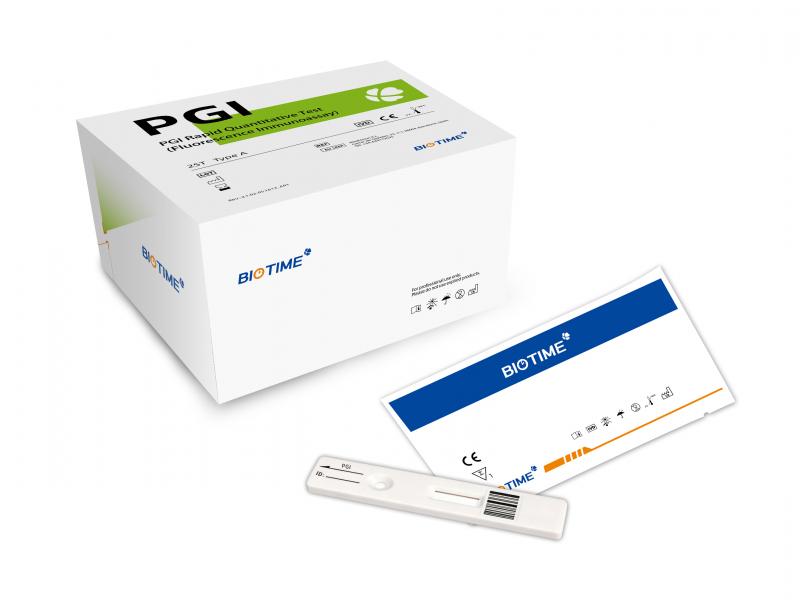
PGI Rapid Quantitative Test

Human Pepsinogens are aspartic proteases produced in the gastric mucosa and secreted into the gastric lumen that play a major role in the digestion of proteins after activation of acidic pH. It is synthesized as isoymogens and is classified into two groups (Pepsinogen I and Pepsinogen II).
Product Detail

Product Specification

Specimen Types
Serum
Specimen Capacity
10μL
Reaction Time
15 min
Sample Capacity
80μL
PGI Detection Range 1-200ng/mL


Leave A Message

Please provide us with the information below, and we'll contact you as soon as possible.
Related Products
biotime PGII Rapid Quantitative Test
PGII Rapid Quantitative Test
Human Pepsinogens are aspartic proteases produced in the gastric mucosa and secreted into the gastric lumen that play a major role in the digestion of proteins after activation of acidic pH. It is synthesized as isoymogens and is classified into two groups (Pepsinogen I and Pepsinogen II).
biotime PGI PGII Rapid Quantitative Test
PGI/PGII Rapid Quantitative Test
Human pepsinogens I (PGI) and II (PGII) are proenzymes of pepsin—an endoproteinase of gastric juice. PGI is secreted mainly by chief cells in the fundic mucosa, whereas PGII is also secreted by the pyloric glands and the proximal duodenal mucosa. Serum PGI and PGII concentrations and the ratio between PGI and PGII may be related to the histologic and functional status of the gastric mucosa.
Biotime fT3 Rapid Quantitative Test
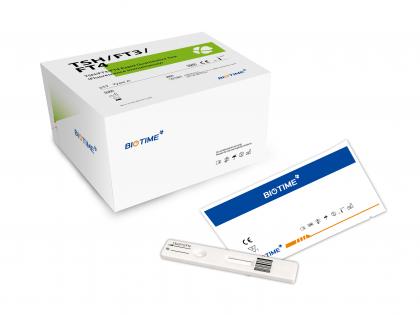
fT3 Rapid Quantitative Test
Thyroxine (T4) is the main thyroid hormone secreted into the bloodstream by the thyroid gland. Together with triiodothyronine (T3) it plays a vital role in regulating the body's metabolic rate, influences the cardiovascular system, growth and bone metabolism, and is important for normal development of gonadal functions and nervous system.
 Monkeypox Virus ( Real-time PCR ) test kit
Detection Kit for Monkeypox Virus ( Real-time PCR )
Detection Kit for Monkeypox Virus ( Real-time PCR ) is designed for the qualitative detection of Monkeypox Virus (MPV) DNA extracted from skin, fluid, or crusts collected directly from skin lesions. It's based on real-time PCR technology, the primers and probes target specific sequences of MPV, and do not react with nucleic acids of other pathogens.
AMH Rapid Quantitative Test (Chemiluminescence Immunoassay)
AMH Rapid Quantitative Test (Chemiluminescence Immunoassay) is used for in vitro quantitative detection of the Anti-Mullerian hormone (AMH) concentration in human serum and plasma that contains heparin /EDTA and other anticoagulants samples, mainly used for auxiliary diagnosis of reproductive hormones diseases.
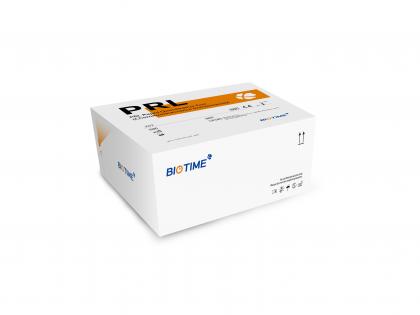
PRL Rapid Quantitative Test (Chemiluminescence Immunoassay)
PRL Rapid Quantitative Test (Chemiluminescence Immunoassay) is used for in vitro quantitative detection of the Prolactin (PRL) concentration in human serum and plasma that contains heparin /EDTA and other anticoagulants samples, mainly used for auxiliary diagnosis of reproductive hormones diseases. 
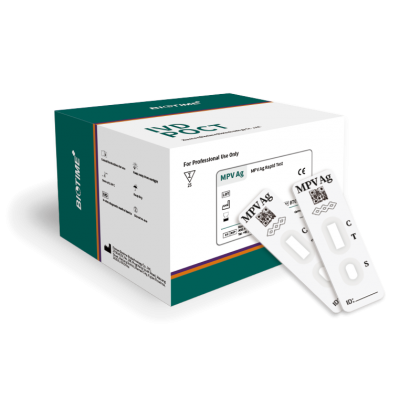
MPV IgG/IgM Rapid Test
The MPV IgG/IgM Rapid Test is a lateral flow chromatographic immunoassay for the qualitative detection and differentiation of IgM and IgG antibodies to Monkeypox Virus (MPV) in human serum, plasma, venous whole blood, or fingertip blood. It is intended for use as an aid in identifying individuals with an adaptive immune response to MPV, indicating recent or prior infection. At this time, it is unknown how long antibodies persist following infection and if the presence of antibodies confers protective immunity. The MPV IgG/IgM Rapid Test should not be used to diagnose acute MPV infection. For professional in vitro diagnostic use only.
biotime NGAL Rapid Quantitative Test
NGAL Rapid Quantitative Test
NGAL (neutrophil gelatinase-associated lipocalin, lipocalin-2, sidero- calin) is a novel biomarker for diagnosing acute kidney injury (AKI). Under normal conditions NGAL levels are low in urine and plasma Still, they rise sharply from basal levels in response to kidney injury to reach diagnostic levels within a very short time - as much as 24 hours or more before any significant rise in serum creatinine.
Leave A Message

Leave A Message

    Please provide us with the information below, and we'll contact you as soon as possible.
Home

products

about

contact