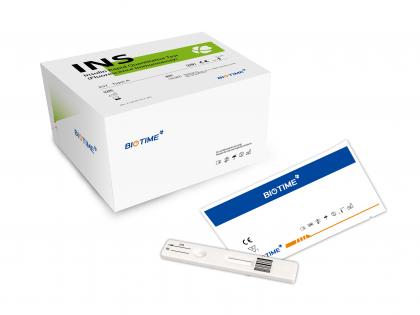
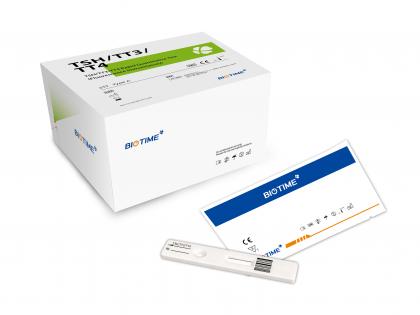
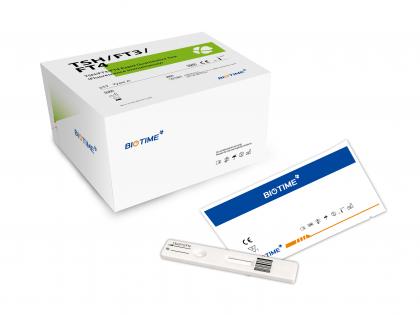
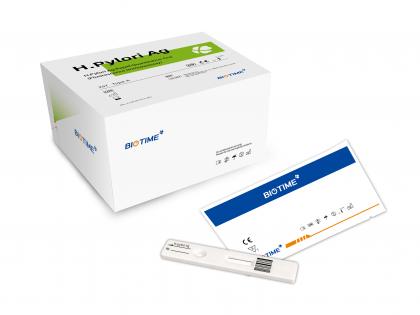
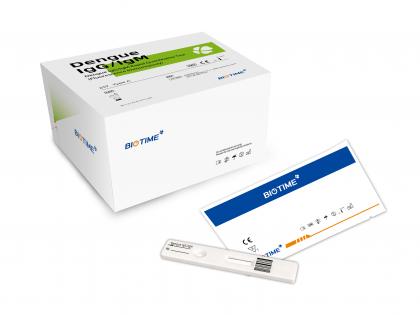
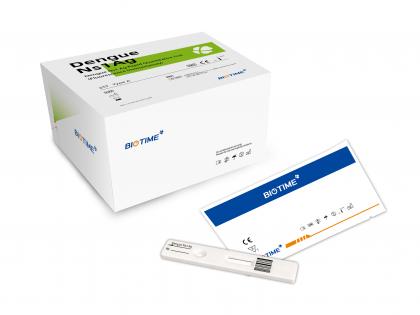
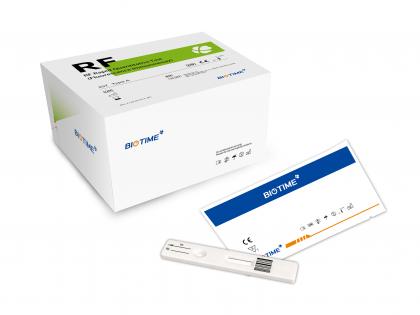
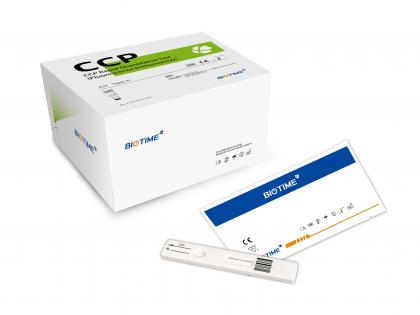
immunofluorescence reagents
  • Biotime in MEDICAL FAIR ASIA 2022 Singapore
    Biotime in MEDICAL FAIR ASIA 2022 Singapore August 31, 2022
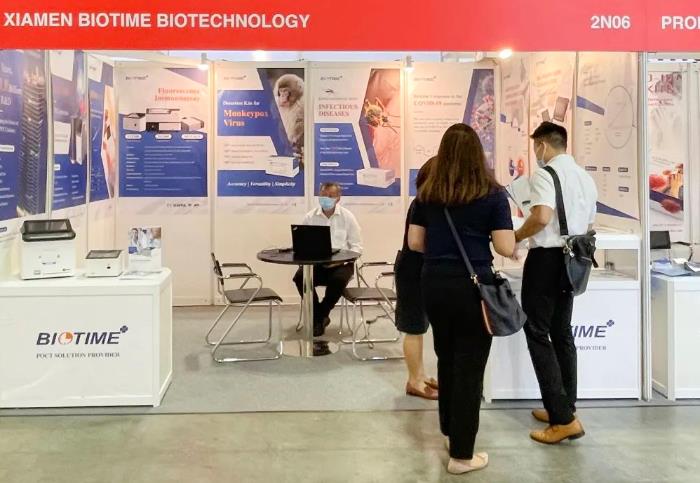
    On August 31, the 13th Singapore International MEDICAL FAIR ASIA 2022 was held at the Marina Bay Sands Convention Centre. With its comprehensive POCT solutions and newly developed innovative products, Xiamen Biotime Biotechnology Co., Ltd. has made an amazing debut. On the first day of the exhibition, there was an endless stream of customers at the exhibition booth. Many international friends came to learn about the rapid detection products and solutions of Biotime. In this exhibition, Biotime showcased three product series, including immunofluorescence instrument BIOT-YG-I, FLI-100, and FLI-600, HPLC automatic HbA1c analyzer, diabetes diagnostic reagent, monkeypox product, and COVID-19 solution, and introduced customized solutions that meet the needs of each customer which won high praise. From August 30th to September 2nd, we are looking forward to your arrival at booth 2N06, Marina Bay Sands Convention Centre, Singapore!
    View More
  • Human Reproduction and Hormones Including FSH, LH and More
    Human Reproduction and Hormones Including FSH, LH and More August 23, 2022
    The human male and female reproductive cycles are controlled by the interaction of hormones from the hypothalamus and anterior pituitary with hormones from reproductive tissues and organs. In both sexes, the hypothalamus monitors and causes the release of hormones from the pituitary gland. When the reproductive hormone is required, the hypothalamus sends a gonadotropin-releasing hormone (GnRH) to the anterior pituitary. This causes the release of follicle stimulating hormone (FSH) and luteinizing hormone (LH) from the anterior pituitary into the blood. Note that the body must reach puberty in order for the adrenals to release the hormones that must be present for GnRH to be produced. Although FSH and LH are named after their functions in female reproduction, they are produced in both sexes and play important roles in controlling reproduction. Male Hormones At the onset of puberty, the hypothalamus causes the release of FSH and LH into the male system for the first time. FSH enters the testes and stimulates the Sertoli cells to begin facilitating spermatogenesis. LH also enters the testes and stimulates the interstitial cells of Leydig to make and release testosterone into the testes and the blood. Testosterone, the hormone responsible for the secondary sexual characteristics that develop in the male during adolescence, stimulates spermatogenesis. These secondary sex characteristics include a deepening of the voice, the growth of facial, axillary, and pubic hair, and the beginnings of the sex drive. Figure 1 Hormones control sperm production. Female Hormones The control of reproduction in females is more complex. As with the male, the anterior pituitary hormones cause the release of the hormones FSH and LH. In addition, estrogens and progesterone are released from the developing follicles. Estrogen is the reproductive hormone in females that assists in endometrial regrowth, ovulation, and calcium absorption. These include breast development. Progesterone assists in endometrial re-growth and inhibition of FSH and LH release. In females, FSH stimulates development of egg cells, called ova, which develop in structures called follicles. Follicle cells produce the hormone inhibin, which inhibits FSH production. LH also plays a role in the development of ova, induction of ovulation, and stimulation of estradiol and progesterone production by the ovaries. Estradiol and progesterone are steroid hormones that prepare the body for pregnancy. Estradiol produces secondary sex characteristics in females, while both estradiol and progesterone regulate the menstrual cycle. The Ovarian Cycle and the Menstrual Cycle The ovarian cycle governs the preparation of endocrine tissues and release of eggs, while the menstrual cycle governs the preparation and maintenance of the uterine lining. These cycles occur concurrently and are coordinated over a 22–32 day cycle, with an average...
    View More
  • Xiamen Biotime in AACC 2022
    Xiamen Biotime in AACC 2022 July 27, 2022
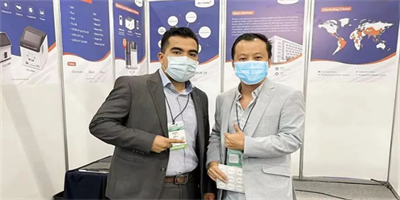
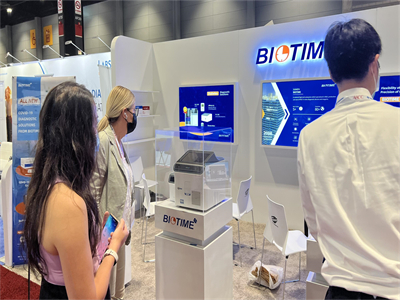
    On July 26, the 74th AACC ANNUAL SCIENTIFIC MEETING CLINICAL LAB EXPO kicked off at the McCormick Convention Center in Chicago, USA! More than 800 companies from more than 100 countries around the world, tens of thousands of international medical professionals and healthcare practitioners came to participate in the exhibition.         ▲ Exhibition site Xiamen Biotime Biotechnology Co., Ltd. made a wonderful appearance with star products and multi-scene solutions, which attracted widespread attention.         ▲ LIVE connection 7.26 - 7.29, 2022 The exhibition is in full swing We are looking forward to your arrival at booth 542
    View More
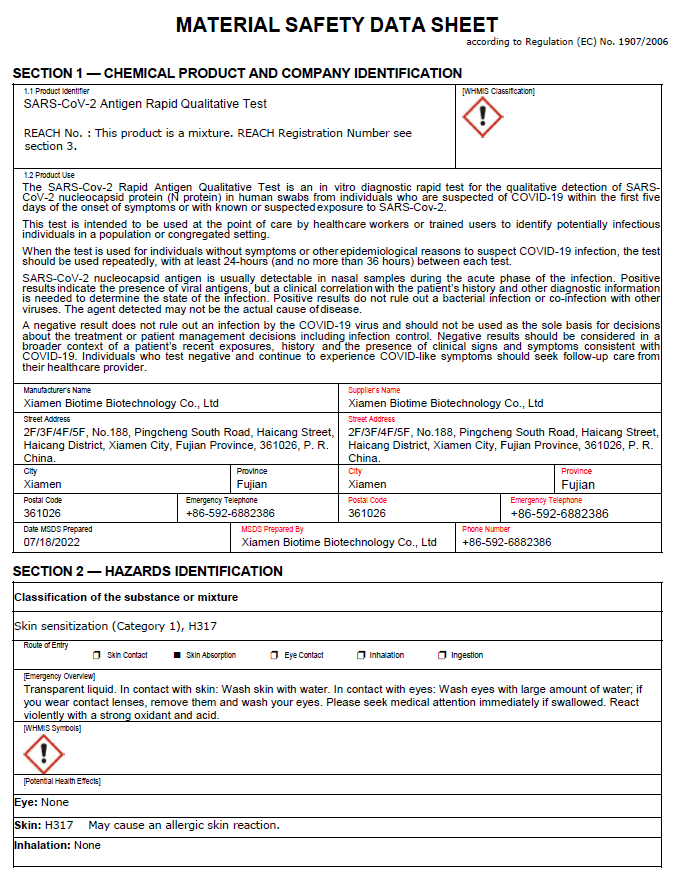
  • Material Safety Data Sheet for SARS-CoV-2 Antigen Rapid Qualitative Test
    Material Safety Data Sheet for SARS-CoV-2 Antigen Rapid Qualitative Test May 31, 2022
    Test/js/htmledit/kindeditor/attached/20220721/20220721105135_95073.pdf
    View More
  • Chemiluminescent Immunoassay
    Chemiluminescent Immunoassay September 02, 2021
    What is Chemiluminescent Immunoassay Chemiluminescent immunoassay (CLIA) is an immunoassay technique where the label, i.e. the true “indicator” of the analytic reaction, is a luminescent molecule. In general, luminescence is the emission of visible or near-visible radiation which is generated when an electron transition from an excited state to a ground state. The resultant potential energy in the atom gets released in the form of light. (Cinquanta, Fontana and Bizzaro, 2017) Chemiluminescent immunoassays offer one of the best solutions for the quantification of low concentrations of specific analytes from a complex mixture for in vitro diagnostic industry. They can also be used as diagnostic tools in medicine, as well as being used in several other different industries for various applications. (Lorne Laboratories, 2021) How Does Chemiluminescence Work Chemiluminescence immunoassay (CLIA) is an assay that combines the chemiluminescence techniques with immunochemical reactions. The assay format is similar to enzyme-linked immunoassays, usually based on heterogeneous assays where antibodies or antigens are immobilized on a solid phase but one of the components is conjugated with a chemiluminescent label. (Lorne Laboratories, 2021) (BrightTALK, 2021) CLIA utilizes chemical probes which could generate light emission through a chemical reactions to label the antibody. (Creative-diagnostics, 2021) The Benefits of Chemiluminescence Immunoassay In recent years, CLIA has gained increasing attention in different fields, including life science, clinical diagnosis, environmental monitoring, food safety, and pharmaceutical analysis because there are benefits of using chemiluminescence such as: ultra-sensitive good specificity wide range of applications simple equipment wide linear range easier in operation and design can detect small amounts of the biological molecule does not require long incubations and the addition of stopping reagents (Creative-diagnostics, 2021) Key Types of Chemiluminescent Immunoassay Methods Chemiluminescent methods that have been commonly seen are direct - using luminophore markers, indirect—using enzyme markers, or electrogenerated – typically nanomaterials based. (Cinquanta, Fontana and Bizzaro, 2017) (Ju, Lai and Yan, 2017) Indirect CLIA, using enzyme markers This common CLIA method involves an enzyme, typically horseradish peroxidase (HRP) or alkaline phosphatase (AP), conjugated to a secondary antibody. This HRP– or AP–secondary antibody complex then catalyzes the conversion of chemiluminescent substrate, luminol and CSPD reagent respectively. These substrates, when oxidized, provide an easy means of signal detection and quantification due to prolonged signal emission. (Shimadzu, 2021) Direct CLIA, using luminophore markers This method commonly uses acridinium esters as luminophores conjugated directly to the primary monoclonal antibody to generate a signal. Acridinium esters are highly specific labels that spontaneously oxidiz...
    View More
  • Xiamen Biotime in AACC 2022 Review
    Xiamen Biotime in AACC 2022 Review July 29, 2022
    From July 26th to 28th, AACC ANNUAL SCIENTIFIC MEETING CLINICAL LAB EXPO ended successfully. In this exhibition, Xiamen Biotime Biotechnology Co., Ltd. showed multi-scenario in vitro diagnostic solutions, which were recognized and supported by new and old customers. In the future, Xiamen Biotime Biotechnology will continue to provide you with better IVD solutions with high-quality products and services, so stay tuned.
    View More
  • Biotime Pharmaceutical (Shanghai) Co., Ltd. was officially put into operation on August 8 2022
    Biotime Pharmaceutical (Shanghai) Co., Ltd. was officially put into operation on August 8 2022 August 08, 2022
    In the Xiamen Trade Fair on 8th Sep. 2021, Xiamen Biotime Biotechnology Co., Ltd. released new drugs development strategy, planning to invest more than 1 billion yuan of scientific research funds in the medical and health field in the next three years, and at the same time set up another 1 billion yuan to focus on investment Funds mainly in the medical and health field. Xiamen Biotime Biotechnology surpassed the IVD boundary and entered the field of new drugs, which attracted the attention of the industry, and quickly reached extensive strategic cooperation with Hangzhou Adlai Nortye Biopharma Co., Ltd. and Shanghai Medicilon Inc. Less than a year, in the beginning of autumn in 2022, Biotime Pharmaceutical (Shanghai) Co., Ltd. was officially put into operation on August 8. At the unveiling ceremony, Yu Jianping, Deputy General Manager, delivered a speech instead of Chief Executive Zhang Guofeng. From Biotime to Biotime Pharmaceutical, from diagnosis to treatment, we have made a big leap. Today we are here to witness an important historical moment of Biotime Pharmaceutical. I believe that with everyone's support, Biotime Pharmaceutical will get a better tomorrow. Afterwards, Lin Baode, head of R&D of Biotime Pharmaceutical, delivered a speech. Today, Biotime Pharmaceutical may be a little spark, but we believe that it will definitely ignite and attract the attention of the industry in the future! Biotime Pharmaceutical Shanghai R&D Center is located on Cailun Road, Zhangjiang High-tech Park, which is known as China Pharmaceutical Valley. The research center that covers an area of about 700 square meters has invested nearly 50 million yuan to configure various high-end precision instruments and equipment, and built a modern laboratory.
    View More
  • Why doctors are recommending CRP tests even for Covid patients?
    Why doctors are recommending CRP tests even for Covid patients? February 18, 2022
    WHAT IS CRP C-reactive protein (CRP) is a protein made by the liver. CRP levels in the blood increase when there is a condition causing inflammation somewhere in the body. A CRP test measures the amount of CRP in the blood to detect inflammation due to acute conditions or to monitor the severity of disease in chronic conditions. (LABTESTONLINE, 2021) WHY CRP TEST After an injury, the start of an infection, or other cause of inflammation, CRP is released into the blood within several hours, making it a non-specific indicator of inflammation and one of the most sensitive acute phase reactants. You may need this test if you have symptoms of a serious bacterial infection. The level of CRP can surge as much as a thousand-fold in response to bacterial infection (LABTESTONLINE, 2021) Symptoms include: ²  Fever ²  Chills ²  Rapid breathing ²  Rapid heart rate ²  Nausea and vomiting A CRP test is simple and safe, and you don’t need any special preparations. A health care professional will take a blood sample from a vein in your arm, using a small needle. The process usually takes less than 5 minutes and all you feel is a little sting. (MedlinePlus, 2020) HOW OFTEN SHOULD CRP BE CHECKED Checking the CRP level for the entire adult population is not recommended. Some experts recommend checking the serum CRP level routinely along with the cholesterol level; however, although this is not widely accepted. (MedicineNet, 2021) Ideally, for cardiac risk testing, it is advisable to use the average between two separate CRP levels drawn two weeks part. Because measuring CRP levels at any point in time may be influenced by any infection or inflammation in the body, onetime measurement is generally not regarded as an adequate predictor of cardiovascular risk. (MedicineNet, 2021) CRP MEETS COVID-19 The outbreak of COVID-19 is an emerging global health threat. Clinical studies demonstrated that elevated level of C‐reactive protein may be an early marker to predict risk for severity of COVID‐19. It has been found CRP level changes significantly in patients with severe COVID-19 conditions. (MedlinePlus, 2020) With reference to the outcome made by some recent studies, serum concentration of CRP in patients with COVID‐19 are presented in Table 1. (MedlinePlus, 2020) WHY CRP TEST SHOULD BE RECOMMENDED TO THE COVID PATIENTS? Doctors are conducting it mandatorily for the patients with critical conditions who are in hospital care, because it is one of the indicators showing the body’s reaction to the ongoing treatment. In Covid treatment, if the CRP is the normal level then the patient’s body is reacting to the treatment positively and if it is higher than the required, then doctors would check the infection level in the body through other tests like CT scan. CRP test is not costly like CT scan and the CRP level in the patients on the basis of which doctors can decide the next course of action. Doctors recommend it for at least twice on an interval of 4-...
    View More
First 1 ... 4 5 6 7 8 9 10 11 Last
[  A total of  11  pages]
Leave A Message

Leave A Message

    Please provide us with the information below, and we'll contact you as soon as possible.

Home

products

about

contact