Ferritin Quantitative Test

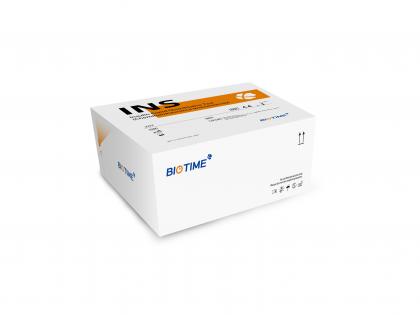
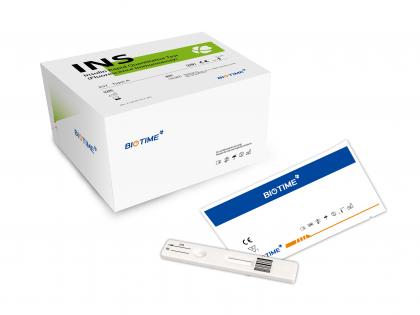
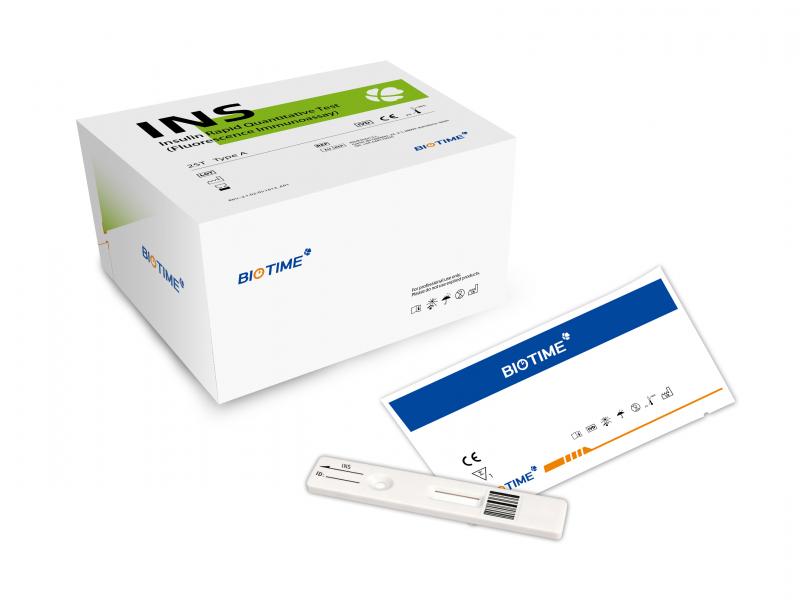
Insulin Rapid Quantitative Test(Fluorescence Immunoassay)

The Biotime Insulin Rapid Quantitative Test is intended to quantify the concentration of insulin in human serum, plasma, or whole blood samples on the Biotime FIA Analyzer (Semi-automatic/Automatic) by fluorescent immunoassay.

-Fluorescence immunoassay

For in vitro diagnostic use only. For professional use only.

Product Detail

Specimen Types
WB/S/P
Sample
Whole Blood:15μL; Serum/Plasma:10μL
Reaction Time
10 min
Assay Range
2~300mIU/L 

1. Auxiliary Differential Diagnosis of Diabetes Mellitus

  • Type 1 diabetes mellitus: Characterized by severe destruction of pancreatic β-cells, resulting in significantly reduced insulin secretion with a flat low-response curve.
  • Early-stage type 2 diabetes mellitus: Insulin levels may be normal or even elevated, indicating the presence of insulin resistance; in advanced stages, secretory function declines and insulin levels decrease.
  • Latent autoimmune diabetes in adults (LADA): Pancreatic function deteriorates rapidly over several years, with insulin secretion patterns falling between those of type 1 and type 2 diabetes.

2. Assessment of Pancreatic β-cell Function

By measuring fasting and postprandial (or post-glucose-load) insulin secretion levels, the test enables quantitative evaluation of islet function and provides critical evidence for assessing the degree of β-cell impairment.

3. Guidance for Clinical Treatment Decisions

  • Helps differentiate whether a patient requires exogenous insulin supplementation or insulin-sensitizing therapy
  • Provides a basis for selecting appropriate hypoglycemic agents
  • Assists in dynamically monitoring treatment efficacy and adjusting therapeutic regimens

4. Early Screening and Risk Assessment

Abnormal insulin secretion patterns (e.g., hyperinsulinemia or early-phase secretion defects) may serve as early warning signals for metabolic disorders and glucose dysregulation, facilitating timely intervention.

Target Populations

The insulin test is recommended for the following patient groups:


1. Individuals with abnormal fasting blood glucose or impaired glucose tolerance

2. Patients with suspected or confirmed diabetes mellitus requiring classification

3. Diabetic patients requiring assessment of islet function or adjustment of treatment plans

4. Obese individuals or those with metabolic syndrome

5. Women with a history of gestational diabetes mellitus

6. Individuals with a family history of diabetes undergoing risk screening

7. Patients with unexplained hypoglycemia

Testing Considerations

To ensure the accuracy and reliability of test results, the following points should be noted:


1. Fasting requirement: A fasting blood sample (≥8 hours) is typically required; for postprandial or glucose-load testing, samples should be collected at specified time points as directed by the physician.

2. Medication interference: Certain drugs (e.g., exogenous insulin, oral hypoglycemic agents, corticosteroids) may affect test results; patients should inform their physician of all medications they are taking.

3. Hemolysis prevention: Hemolyzed specimens may interfere with assay accuracy; proper specimen handling procedures should be .

4. Interpretation considerations: Results should be interpreted in conjunction with blood glucose levels, C-peptide values, and the patient's clinical presentation. A single abnormal value should not be used as the sole basis for diagnosis.

5. Reference range: Reference intervals may vary across laboratories and detection methods; results should be interpreted based on the reference range provided by the testing laboratory.


Leave A Message

Please provide us with the information below, and we'll contact you as soon as possible.
Related Products
Biotime HbA1c Rapid Quantitative Test
HbA1c Rapid Quantitative Test
HbA1c is the product of the hemoglobin combining with blood glucose in red blood cells, which can reflect the average blood glucose level over the amid 2-3 months.
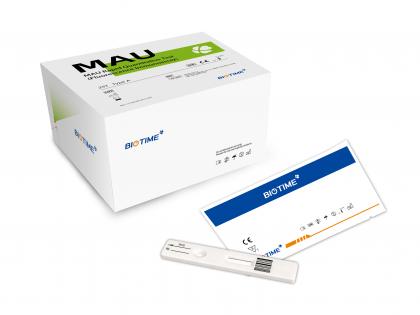
biotime MAU Rapid Quantitative Test
MAU Rapid Quantitative Test
MAU(Microalbumin) occurs when the kidney leaks small amounts of albumin into the urine, which is an early marker of kidney damage.
Cys C Rapid Quantitative Test
Cys-C Rapid Quantitative Test
Serum Cystatin C(Cys-C) has been proposed as a marker of glomerular filtration rate(GFR). Serum creatinine (creatinine) is widely used to estimate the glomerular filtration rate, but its tubular secretion, dependence on muscle mass, alteration in some inflammatory diseases, and analytical interferences can limit its utility. Thus, Cys-C has been proposed as a novel biomarker of kidney function.
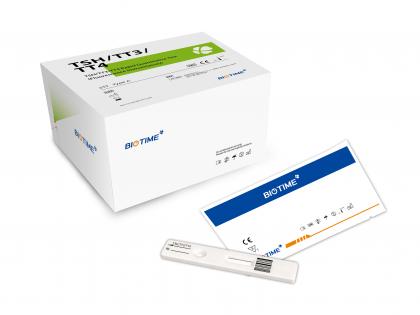
TSH/TT3/TT4 Rapid Quantitative Test (Fluorescence Immunoassay)
The Biotime TSH/TT3/TT4Rapid Quantitative Testis intended to quantitatively detect theconcentration of thyroid stimulating hormone (TSH),total triiodothyronine (TT3) and total thyroxine (TT4) in human serum and plasma samples on Biotime FIA Analyzer byfluorescent immunoassay. The test is used as an aiddiagnosis of thyroiddisease. For in vitro diagnostic use only. For professional use only.
25(OH) D Rapid Quantitative Test (Chemiluminescence Immunoassay)
25(OH) D Rapid Quantitative Test (Chemiluminescence Immunoassay) is used for in vitro quantitative detection of the 25-hydroxyvitamin D (25 (OH) D) concentration in human serum, plasma that contains heparin /EDTA and other anticoagulants samples, mainly used for auxiliary diagnosis of health check.
Neutralizing Antibody Rapid Test
SARS-CoV-2 Neutralizing Antibody Rapid Test
Biotime SARS-CoV-2 Neutralizing Antibody rapid test is a fluorescence immunoassay(FIA) for the qualitative detection of total neutralizing antibodies to SARS-CoV-2 in human serum or plasma. It is useful as an aid in identifying individuals with an adaptive immune response to SARS-CoV-2, indicating recent or prior infection.
Biotime HLC-100 Fully Automated HbA1c Analyzer
HLC-100 Fully Automated HbA1c Analyzer
Biotime’s HLC-100 Fully Automated HbA1c Analyzer provides a prompt, reliable solution for diabetes diagnosis. It utilizes the high performance liquid chromatography (HPLC) analytical technique, a gold standard that helps detect glycosylated hemoglobin (HbA1c) with superior precision. Its capability to measure HbA1c, HbF, and other hemoglobin fragments enables clinicians to make quick, accurate diagnoses, thus facilitating timely treatment for the patient.
Biotime 25(OH)D Rapid Quantitative Test
25(OH)-D Rapid Quantitative Test
25(OH)-D is a prehormone that is produced in the liver by hydroxylation of vitamin D3 (cholecalciferol) by the enzyme cholecalciferol 25-hydroxylase. Physicians worldwide measure this metabolite to determine a patient's vitamin D status.
Leave A Message

Leave A Message

    Please provide us with the information below, and we'll contact you as soon as possible.
Home

products

about

contact