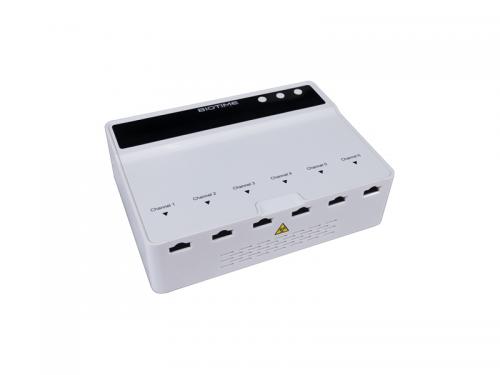
The incubation chamber is an auxiliary device for Biotime’s fluorescence immunoassay analyzer. The reaction temperature and time is critical for test results. The incubation chamber provides an optimized environment as well as automatic timers for test reactions to improve the reliability of test results.
FLI-600 is a fluorescent immunoassay system with 6 channels that uses blood and urine to measure the quantitative concentration of targeted analyte. Its automated test process enables to carry out multiple simultaneous tests for six different samples.
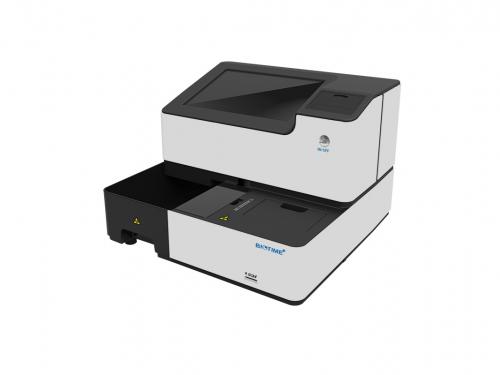
The ALL NEW FLI-100 Analyser represents an elevated standard at Biotime, in pursuing simplicity, quality assurance, and data security for healthcare organizations. Designed for quantitative in vitro assay determinations, the Biotime FLI-100 analyser was purposefully built to support immunoassay analysis for a broad range of applications – from biomarker work to infectious disease testing. The analyser’s immunofluorescence technology yields high sensitivity, reliable, and reproducible results for convenient point-of-care diagnostic testing on one device with a small footprint.
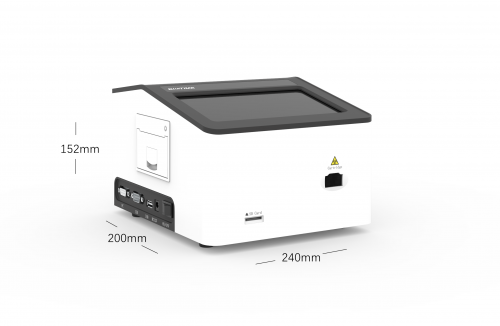
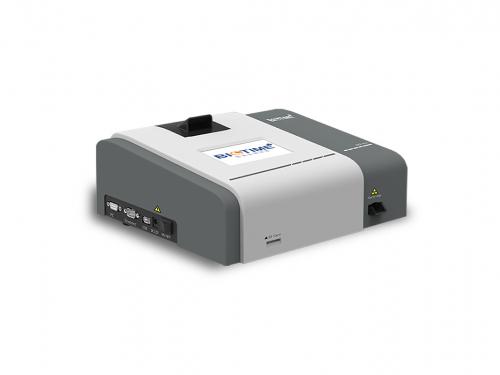
BIOT-YG-I is a fluorescence immunoassay system with single channel that measures the quantitative concentration of a targeted analyte in human blood and urine.
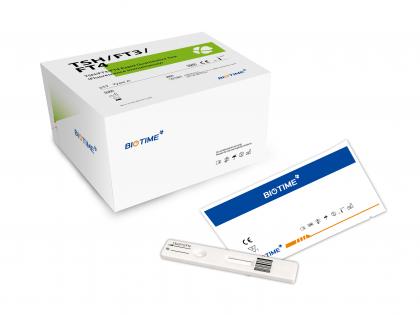
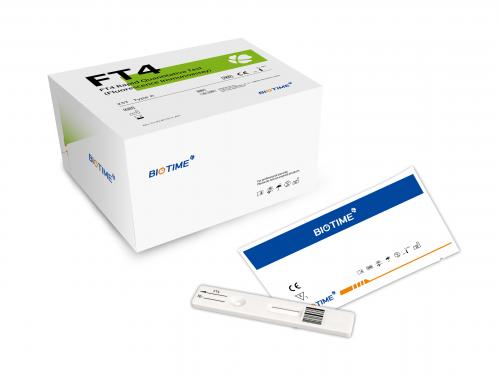
The Biotime FT4Rapid Quantitative Test is intended to quantify the concentration of FT4 in human serum on the Biotime FIA Analyzer (Semi-automatic / Automatic) by fluorescent immunoassay. The test is used as an aid in the detection of hyperthyroidism. -Fluorescence immunoassay -hyperthyroidism For in vitro diagnostic use only. For professional use only.
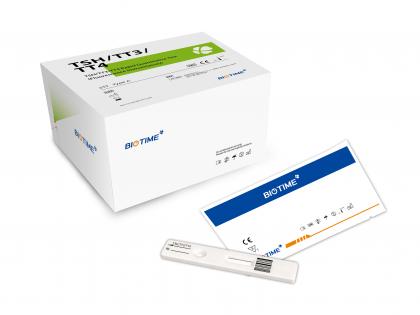
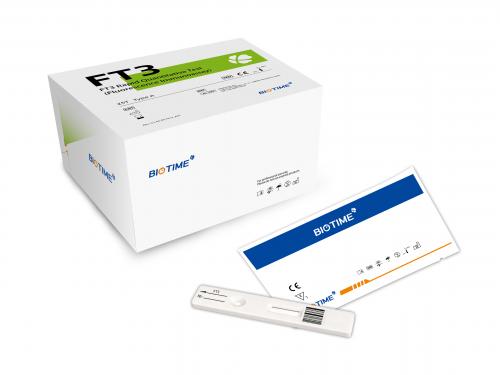
The Biotime FT3 Rapid Quantitative Test is intended to quantify the concentration of FT3 in human serum on the Biotime FIA Analyzer (Semi-automatic / Automatic) by fluorescent immunoassay. The test is used as an aid in the detection of hyperthyroidism. -Fluorescence immunoassay -hyperthyroidism For in vitro diagnostic use only. For professional use only.
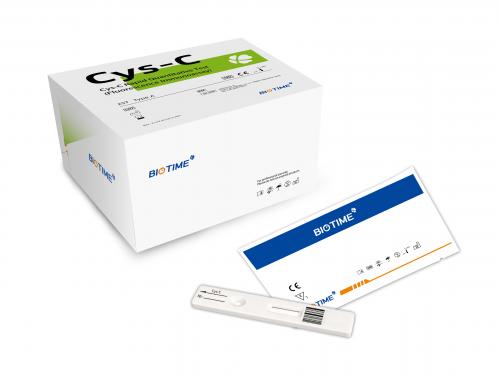
Serum Cystatin C(Cys-C) has been proposed as a marker of glomerular filtration rate(GFR). Serum creatinine (creatinine) is widely used to estimate the glomerular filtration rate, but its tubular secretion, dependence on muscle mass, alteration in some inflammatory diseases, and analytical interferences can limit its utility. Thus, Cys-C has been proposed as a novel biomarker of kidney function.





 IPv6 network supported