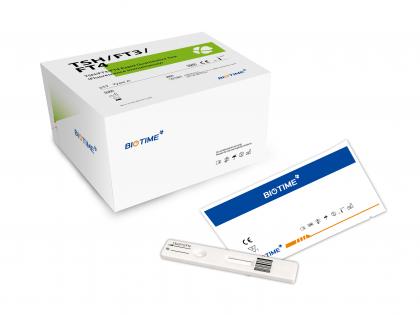
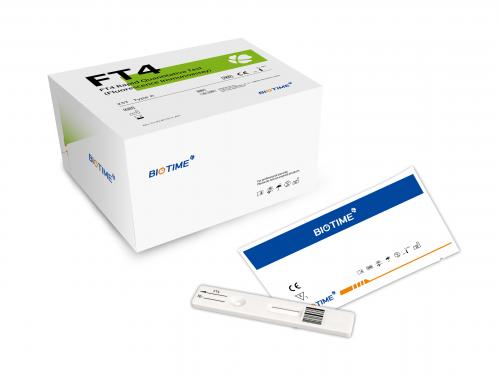
The Biotime FT4Rapid Quantitative Test is intended to quantify the concentration of FT4 in human serum on the Biotime FIA Analyzer (Semi-automatic / Automatic) by fluorescent immunoassay. The test is used as an aid in the detection of hyperthyroidism. -Fluorescence immunoassay -hyperthyroidism For in vitro diagnostic use only. For professional use only.
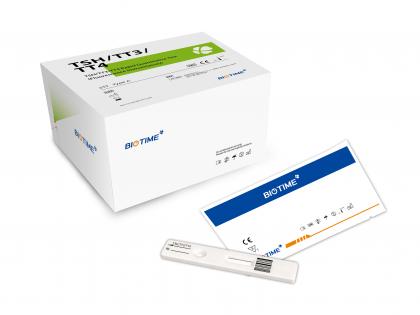
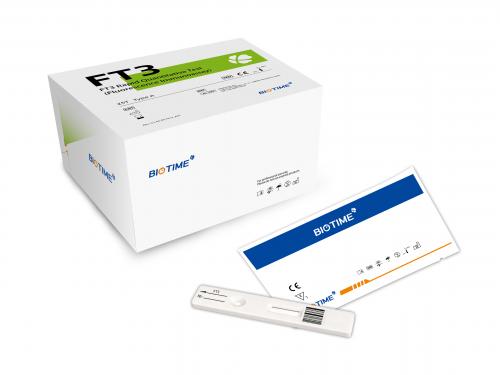
The Biotime FT3 Rapid Quantitative Test is intended to quantify the concentration of FT3 in human serum on the Biotime FIA Analyzer (Semi-automatic / Automatic) by fluorescent immunoassay. The test is used as an aid in the detection of hyperthyroidism. -Fluorescence immunoassay -hyperthyroidism For in vitro diagnostic use only. For professional use only.
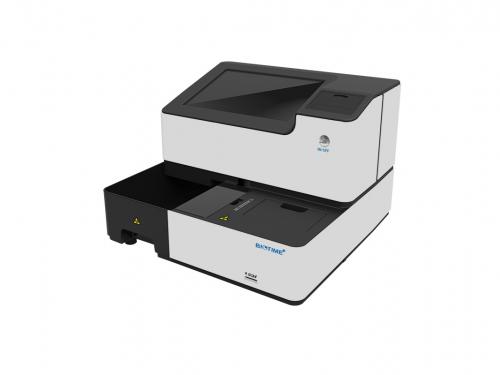
FLI-600 is a fluorescent immunoassay system with 6 channels that uses blood and urine to measure the quantitative concentration of targeted analyte. Its automated test process enables to carry out multiple simultaneous tests for six different samples.
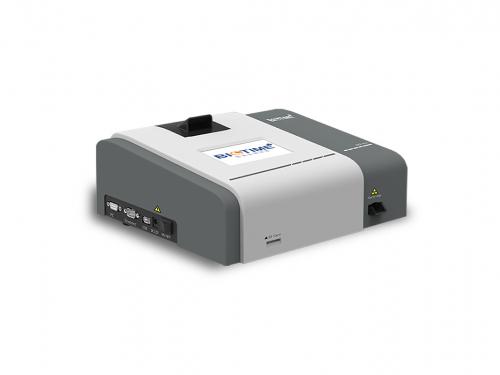
BIOT-YG-I is a fluorescence immunoassay system with single channel that measures the quantitative concentration of a targeted analyte in human blood and urine.
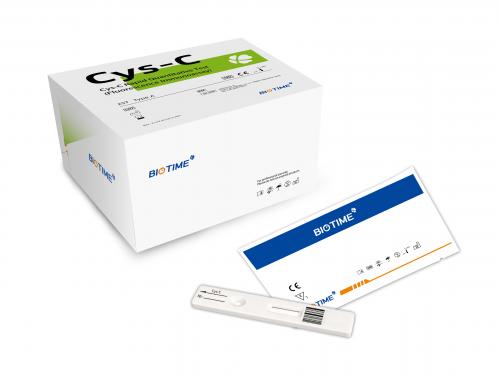
Serum Cystatin C(Cys-C) has been proposed as a marker of glomerular filtration rate(GFR). Serum creatinine (creatinine) is widely used to estimate the glomerular filtration rate, but its tubular secretion, dependence on muscle mass, alteration in some inflammatory diseases, and analytical interferences can limit its utility. Thus, Cys-C has been proposed as a novel biomarker of kidney function.
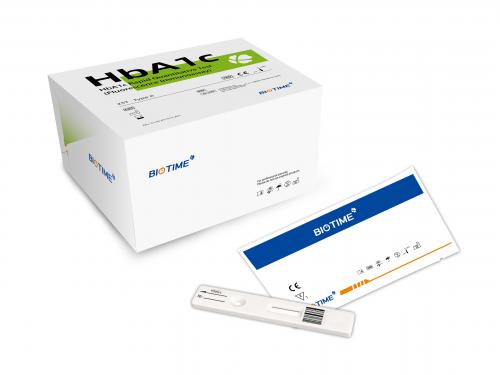
HbA1c is the product of the hemoglobin combining with blood glucose in red blood cells, which can reflect the average blood glucose level over the amid 2-3 months.
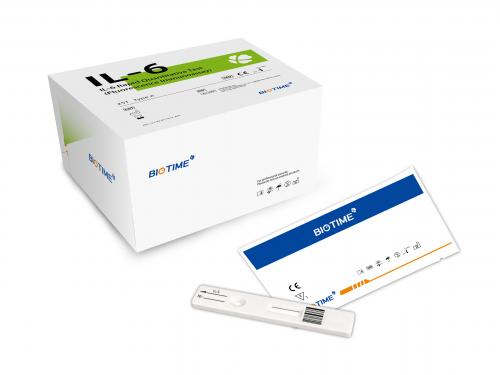
Interleukin 6 (IL-6) is an interleukin that acts as both a pro inflammatory cytokine and an anti-inflammatory myokine. osteoblasts secrete IL-6 to stimulate osteoclast formation. Smooth muscle cells in the tunica media of many blood vessels also produce IL-6 as a pro-inflammatory cytokine.





 IPv6 network supported